Fleet managers lose sleep over one recurring nightmare. A truck goes missing from the tracking dashboard. A toll booth camera fails to read a number plate. A compliance audit flags a mismatch between vehicle records and physical plates. These aren’t small glitches. They cost logistics companies real money, damage customer trust, and slow down India’s fast-growing commercial transportation sector.
If you run a fleet, manufacture vehicles, or manage logistics operations, you already know that plate-related errors ripple through your entire business. This article breaks down how a license plate manufacturer has quietly become one of the most important technology partners in commercial mobility.
You’ll learn how secure registration plates now power fleet analytics, automated verification, and compliance systems. Stick around, because understanding this shift could save your fleet from expensive blind spots.
The Evolution of Commercial Fleet Intelligence in India’s Transportation Industry
India’s logistics and fleet ecosystem has changed dramatically over the past decade. Warehousing, e-commerce delivery, manufacturing dispatch, and long-haul trucking now run on tighter schedules and thinner margins than ever before. Manual record-keeping cannot keep pace with this volume.
Fleet operators today expect real-time visibility into where every vehicle sits, how it performs, and whether it complies with regulations. This demand has pushed transportation companies towards digital fleet management platforms that track fuel usage, driver behaviour, route efficiency, and vehicle health.
None of this intelligence means anything without accurate identification. A fleet management system is only as reliable as the identity layer feeding it data. That’s where vehicle identification systems built around standardised, secure registration plates come into play. India’s vehicle registration base crossed 413 million as of 2025 to 2026, according to the Ministry of Road Transport and Highways, and every one of those vehicles depends on a trustworthy plate to participate in digital traceability networks.
A license plate manufacturer operating at scale essentially builds the identity backbone that fleet intelligence software relies on. Without standardised plates, automated systems cannot reliably match a physical vehicle to its digital records across thousands of checkpoints nationwide.
Why Commercial Fleet Intelligence Begins with Secure Vehicle Identification
Every commercial vehicle generates a constant stream of data throughout its working day. Toll plazas scan it. Warehouse gates log it. Weighbridges record it. Regulatory checkpoints verify it. Fleet dashboards update based on it. All of this only works if each data point gets tied to the correct vehicle every single time.
So, why does commercial fleet intelligence begin with secure vehicle identification? Because a single mismatch between a vehicle and its recorded identity breaks the entire chain of trust. If a toll system misreads a plate, the wrong vehicle gets billed. If a warehouse gate fails to recognise a truck, dispatch schedules fall apart. If a compliance officer cannot verify plate authenticity, the vehicle risks penalties or seizure.
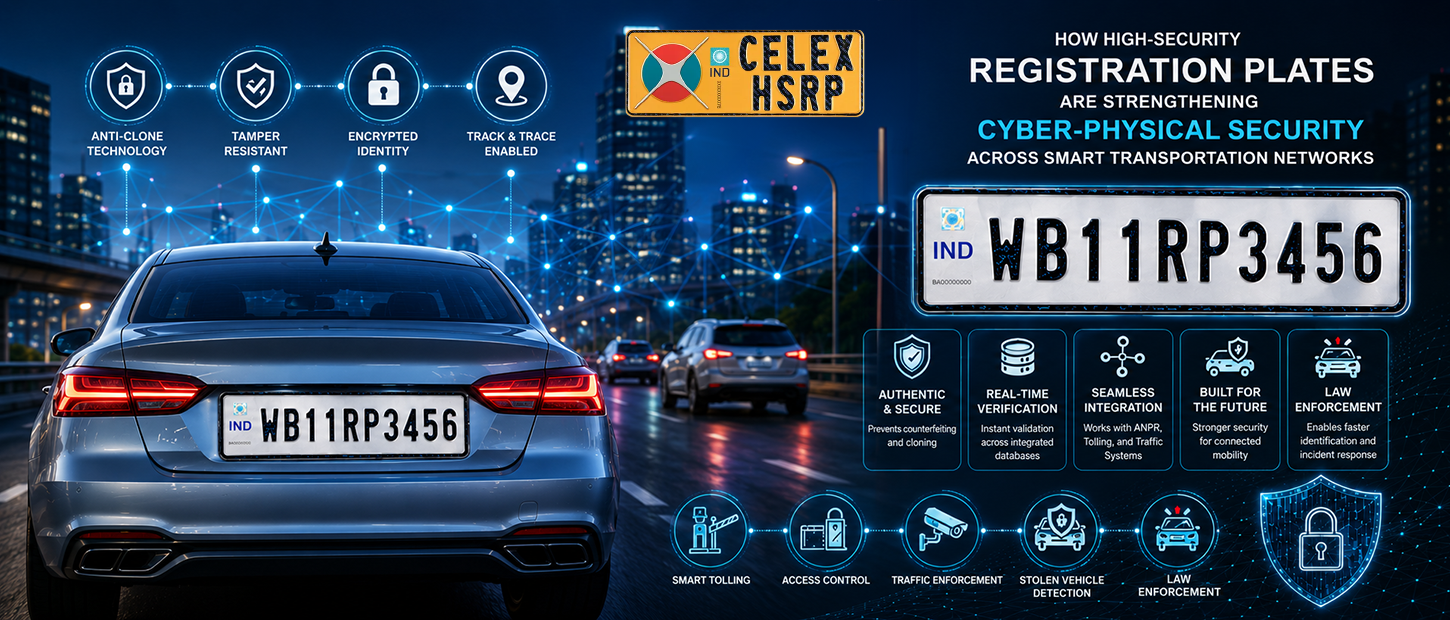
High-security registration plates solve this problem through tamper-evident vehicle identification. These plates carry laser-etched codes, embedded holograms, and non-reusable snap locks that prevent duplication or forgery. This level of manufacturing precision creates a dependable identity layer that supports operational transparency across the commercial vehicle lifecycle.
Fleet operators who invest in vehicles fitted with genuine HSRPs reduce disputes at toll booths, speed up warehouse entry, and simplify regulatory audits. The plate ceases to be a legal formality and becomes an operational asset.
How License Plate Manufacturers Enable Intelligent Fleet Data Ecosystems
Standardised registration plates do more than satisfy legal requirements. They actively enable fleet data ecosystems to function smoothly. When every plate follows the same format, size, font, and security specification, machine reading systems across different states and different agencies can process them consistently.
This consistency matters enormously for logistics companies operating across state lines. A truck moving from West Bengal to Maharashtra passes through multiple toll systems, checkpoints, and monitoring cameras. If plate standards vary or degrade in quality, automated systems struggle to extract accurate readings, which corrupts the data feeding into fleet management software.
A precision-focused HSRP manufacturer produces plates engineered for machine-readable identification, supporting synchronisation between physical vehicles and digital fleet platforms. This synchronisation allows logistics companies to monitor vehicle movement, track utilisation rates, and measure operational performance with far greater confidence than manual logging ever allowed.
Fleet managers benefit directly from this reliability. Speedy invoice processing, fewer accounting errors, and clearer audit trails are all results of accurate plate data.
The Technology Behind High Security Registration Plates for Commercial Fleets
Modern HSRPs pack serious engineering into a small metal plate. Each plate typically includes a laser-etched permanent identification number that cannot be altered without visible damage. A chromium-based hologram sits in one corner, difficult to replicate and easy for inspectors to verify at a glance.
Retroreflective sheeting covers the plate’s surface, allowing headlights and cameras to read the plate clearly at night or in poor weather conditions. This feature alone significantly improves automated verification accuracy for highway monitoring systems and toll cameras operating after dark.
Tamper-evident snap locks fasten the plate to the vehicle. These locks break upon removal, making it immediately obvious if someone has tried to detach or swap a plate. Combined with standardised embossing that meets national specifications, this manufacturing approach creates plates built to resist fraud and withstand years of road exposure.
Manufacturing precision directly shapes fleet reliability. A poorly produced plate with faded reflective coating or shallow embossing causes recognition failures at toll plazas and weighbridges. A precision-engineered plate reduces these failures and keeps fleet operations running smoothly across thousands of daily transactions.
Integrating Commercial Fleet Operations with Automated Recognition Systems
Automatic Number Plate Recognition technology has expanded rapidly across India’s highway network, toll infrastructure, and warehouse security systems. These camera-based systems read plates in real time and match them against databases for billing, access control, and compliance monitoring.
How do high-security registration plates improve fleet traceability and compliance? Standardised plates give recognition cameras a consistent target to scan. Uniform font size, spacing, and reflective properties reduce misreads that would otherwise trigger manual intervention or billing errors.
Weighbridge automation depends on the same principle. Trucks passing through automated weighbridges need their plates read instantly and accurately to log weight data against the correct vehicle record. Toll collection systems function the same way, deducting fares automatically based on plate recognition rather than manual toll booth stops.
Warehouse access control systems increasingly use plate recognition to grant or deny entry without human gatekeepers. A logistics fleet with well-manufactured, standardised plates moves through these checkpoints faster, reducing idle time and improving overall route efficiency. This is fleet intelligence working exactly as intended, quietly, automatically, and accurately.
What Makes Modern License Plate Manufacturers Essential for Commercial Fleet Intelligence
The answer lies in how far their role has expanded beyond simple plate production. Contemporary manufacturers now function as infrastructure partners supporting secure identity creation, traceability systems, regulatory compliance, and connectivity with software platforms.
OEM partnerships form a critical part of this expanded role. When a manufacturer collaborates with vehicle makers, plates are fitted at the dealership, ensuring every vehicle leaves with a compliant, secure identity already in place. This reduces the compliance burden on individual vehicle owners and fleet operators.
Nationwide manufacturing and distribution infrastructure also matter enormously. A commercial HSRP manufacturer with extensive geographic coverage can deliver plates exclusively to authorised OEM dealers, ensuring fleet operators managing multi-state logistics networks receive consistent quality no matter where their vehicles are registered.
HSRP and license plates, produced by Celex Technologies Pvt. Ltd, reflect this scale. The company operates through 348 touch points nationwide, maintains a presence in 23 states, and supplies over 6.10 crore HSRPs. It works with more than 500 OEM customers and over 12,000 dealer partners, backed by an annual manufacturing capacity exceeding 5 crore plates. With a team strength of over 500 professionals and more than 23 years of industry experience, the company represents the kind of large-scale, technology-driven manufacturing that today’s commercial fleet intelligence infrastructure depends on.
How Do High-Security Registration Plates Improve Fleet Traceability and Compliance?
Fleet traceability depends on being able to trace a vehicle’s complete history accurately, from ownership records through maintenance logs to insurance validity. HSRPs simplify this entire chain by giving every vehicle a permanent, verifiable identity that regulatory systems, insurers, and fleet managers can all reference consistently.
Ownership verification becomes far simpler when plates cannot be duplicated or transferred fraudulently. Fleet audits move faster because inspectors can confirm plate authenticity within seconds using visible hologram and laser etching features, rather than cross-referencing paperwork manually.
Maintenance records tied to a secure vehicle identity also improve fleet governance. When service history, inspection reports, and compliance certificates all link back to a tamper-proof plate number, fleet managers gain a single reliable reference point instead of juggling multiple inconsistent records.
Insurance validation benefits similarly. Insurers can confirm vehicle identity quickly during claims processing, reducing fraud risk and speeding up settlements. For fleet operators managing dozens or hundreds of vehicles, this reduction in administrative friction translates directly into cost and time savings.
The Growing Role of AI and Predictive Analytics in Commercial Fleet Intelligence
Artificial intelligence has moved from buzzword to daily operational tool across India’s logistics sector. Predictive maintenance systems now analyse vehicle data to flag potential mechanical issues before they cause breakdowns. Driver behaviour analysis tools monitor braking patterns, speed consistency, and route adherence to improve safety.
Route optimisation algorithms process live traffic and delivery data to suggest faster paths, cutting fuel costs and delivery times. Fleet utilisation analytics help operators identify underused vehicles, allowing better allocation of assets across their network.
Predictive analytics systems like these require consistent, standardised vehicle identification to function accurately. If plate data feeding into these systems contains errors or inconsistencies, the entire analytics output becomes unreliable. Garbage identity data produces garbage predictions, regardless of how sophisticated the AI model is.
Precision-manufactured registration plates improve data quality at the source, giving AI systems clean, consistent inputs to work with. This connection between manufacturing quality and analytics reliability often gets overlooked, but it sits at the foundation of every intelligent fleet management system operating today.
How Celex Technologies Pvt. Ltd Is Leading the Future of Commercial Fleet Intelligence
Celex Technologies Pvt. Ltd has built its reputation over more than 23 years in the vehicle identification industry. The company’s manufacturing capacity, exceeding 5 crore HSRPs annually, positions it among the significant contributors to India’s high-security registration plate supply chain.
Its footprint spans 23 states and 348 touch points, giving fleet operators and OEMs consistent access to compliant plates regardless of regional location. Partnerships with over 500 OEM customers demonstrate the trust vehicle manufacturers place in the company’s production standards and reliability.
A dealer network exceeding 12,000 partners further extends this reach, ensuring commercial vehicle owners across the country can access genuine, compliant plates without long delays. This kind of distribution infrastructure matters enormously for logistics companies that cannot afford downtime waiting for compliance paperwork.
Beyond raw manufacturing numbers, the company’s turnover of over 110 crores for the 2024 to 2025 financial year reflects sustained operational scale in a sector where quality and compliance standards continue tightening year over year.
The Future of License Plate Manufacturers in Intelligent Commercial Mobility
Commercial fleet intelligence will only grow more sophisticated as connected vehicles, AI-powered logistics platforms, and digital governance systems continue expanding across India. Secure vehicle identity remains the foundation supporting all of it.
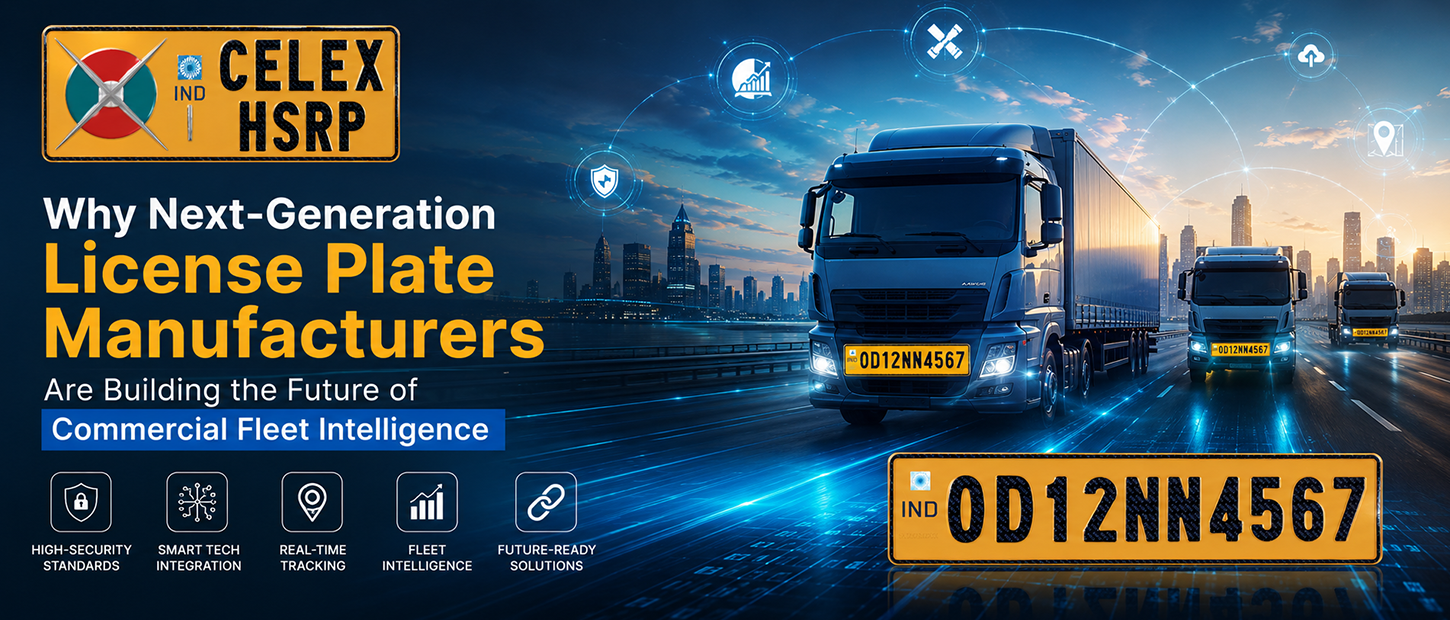
License plate manufacturers have shifted from simple component suppliers into genuine technology partners within the transportation ecosystem. Their manufacturing precision directly influences how well fleet analytics, automated recognition, and compliance systems perform in the real world.
Companies like Celex Technologies Pvt. Ltd illustrate where this industry is heading, combining large-scale manufacturing, nationwide distribution, and OEM integration to support India’s next generation of commercial mobility. As fleet operators demand greater transparency and regulators push for stronger compliance standards, the role of a trusted license plate manufacturer will only become more central to how commercial transportation runs.
Frequently Asked Questions
1. What does a license plate manufacturer actually do for commercial fleets?
A manufacturer produces secure, standardised registration plates that enable accurate vehicle identification, supporting fleet tracking, compliance verification, and automated recognition systems across logistics networks.
2. Why are HSRPs important for fleet compliance?
HSRPs prevent duplication and tampering through laser etching and holograms, making ownership verification, audits, and insurance validation faster and more reliable for fleet operators.
3. How do license plates support AI-powered fleet analytics?
For precise predictive maintenance, route optimisation, and driver behaviour analysis, AI systems require clean, consistent identification data, which standardised plates offer.
4. Can automated recognition systems read any license plate accurately?
No, recognition accuracy depends heavily on plate standardisation, reflective quality, and font consistency, all of which precision manufacturing directly influences.
5. Why should OEMs partner with an established HSRP manufacturer?
Reputable manufacturers provide extensive distribution, reliable quality, and large-scale production, guaranteeing that vehicles exit the dealership fully compliant with national identification regulations.