Identity at Industrial Scale: How Modern License Plate Manufacturers Are Rebuilding India’s Vehicle Security Ecosystem

Introduction


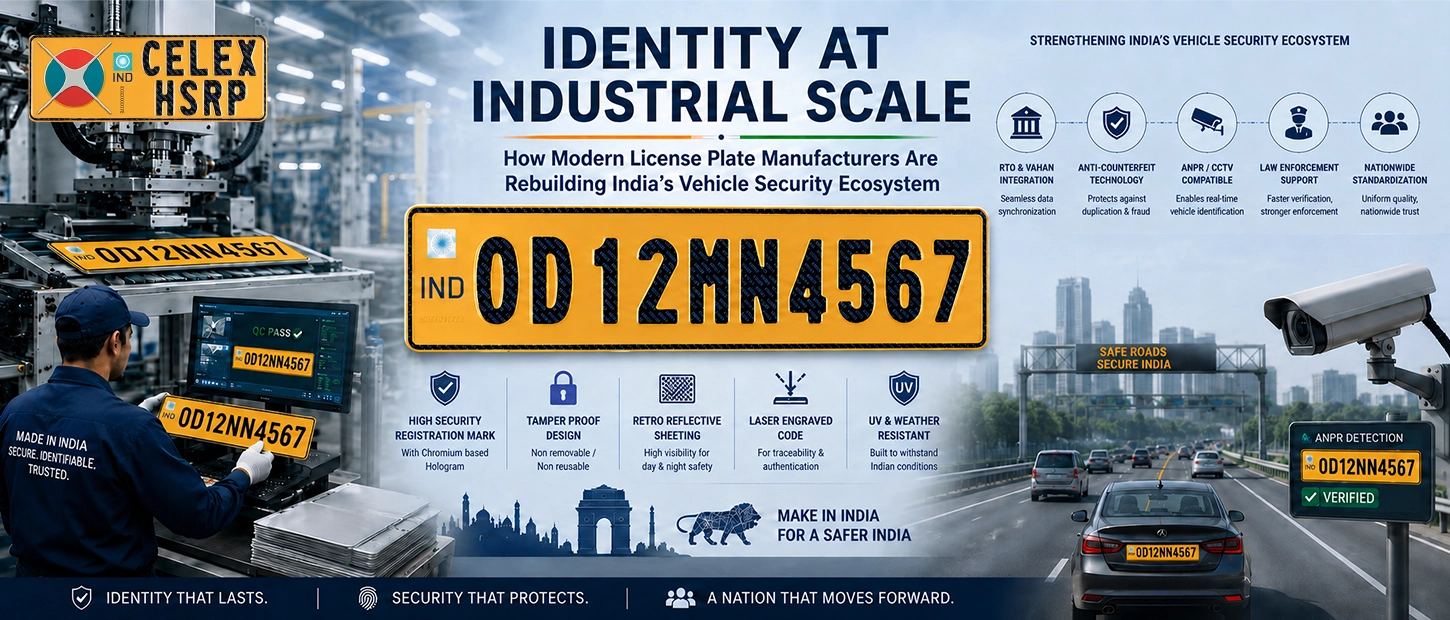
Just imagine: over 413 million registered vehicles rolling across Indian roads, each carrying a unique identity marker that connects it to enforcement systems, digital databases, and national security infrastructure. That small metal plate bolted to your vehicle isn’t just a number anymore. It’s a critical security document that determines whether your vehicle can pass through automated toll booths, whether traffic cameras can identify violations, and whether law enforcement can trace ownership during investigations.


The problem? Millions of vehicles still carry outdated, easily duplicated plates that undermine this entire ecosystem. Road accidents claimed over 1.68 lakh lives in 2022, many involving unidentified vehicles with fake registrations. Enforcement agencies struggle with counterfeit plates that enable crime, toll evasion, and untraceable hit-and-run cases. This article reveals how modern license plate manufacturers have transformed from simple metal fabricators into critical infrastructure providers building India’s vehicle security backbone.


You’ll discover how high-security vehicle registration plates now integrate laser coding, tamper-proof technologies, and digital verification systems that make vehicle identity management smarter, safer, and scalable for India’s explosive transportation growth.


The Transformation of Vehicle Identity Infrastructure in India

India’s vehicle registration ecosystem has undergone a radical transformation over the past decade. What started as basic embossed metal plates with painted numbers has evolved into a sophisticated vehicle identity management system supporting digital governance, automated enforcement, and smart mobility initiatives.


The Ministry of Road Transport and Highways mandated high-security registration plates (HSRP) nationwide, recognising that traditional systems could no longer handle India’s transportation complexity. With vehicle sales crossing 25 million units annually and urban areas struggling with traffic congestion, parking management, and toll collection, standardised tamper-proof number plate technology became non-negotiable. Modern car registration plate manufacturers now operate at the intersection of metallurgy, digital security, and logistics.


Companies like CELEX Technologies Private Limited have emerged as crucial players in this transformation, operating advanced facilities capable of producing millions of secure car registration solutions annually. These manufacturers don’t just stamp metal plates anymore. They engineer identity assets that connect physical vehicles to digital databases, enabling everything from automated challan systems to intelligent traffic monitoring across India’s expanding road networks.


Why Traditional Vehicle Registration Systems Could No Longer Meet Modern Demands

Traditional vehicle registration plates failed India’s modernisation goals in multiple critical ways. Ordinary painted number plates lacked standardisation, making it impossible for automated systems to read vehicle identities consistently. Enforcement agencies faced constant challenges with duplicate registrations, altered numbers, and completely fake plates purchased from roadside vendors. The absence of anti-counterfeit registration systems meant criminals could easily clone vehicle identities to evade detection.


Studies revealed that nearly 40% of stolen vehicles carried fake registration plates, making recovery nearly impossible. Rapid urbanisation compounded these problems dramatically. Cities implementing electronic toll collection systems, smart parking solutions, and automated traffic enforcement infrastructure needed machine-readable, standardised registration formats. Traditional plates couldn’t support these technologies effectively. Digital governance initiatives requiring vehicle-to-database connectivity exposed the fundamental weakness: conventional registration systems offered zero traceability or verification mechanisms.


Modern intelligent traffic enforcement infrastructure demands that every vehicle carry a unique, verifiable, and machine-readable identity marker. This requirement pushed India toward adopting digitally integrated registration plates manufactured under strict security protocols, effectively making traditional systems obsolete across the transportation sector.


The Rise of High-Security Registration Plates in India’s Mobility Ecosystem

High-security vehicle registration plates became central to India’s transportation infrastructure modernisation strategy. The government recognised that vehicle identity fraud undermined everything from taxation revenue to crime investigation capabilities. HSRP implementation across states has dramatically reduced registration plate counterfeiting and improved enforcement efficiency.


These plates incorporate multiple security layers, including chromium-based holograms, laser-etched identification codes, and reflective license plate manufacturing standards that ensure visibility under all lighting conditions. Standardisation benefits extend beyond security. Uniform laser-etched registration plates enable consistent optical character recognition (OCR) across automated enforcement systems, reducing manual intervention and improving accuracy. States implementing HSRP reported 30-40% improvements in challan recovery rates and faster resolution of vehicle-related crimes.


Manufacturers like CELEX Technologies Private Limited support this transformation through large-scale production capabilities and compliance-driven manufacturing systems. As leading HSRP manufacturers, they deliver registration plates meeting stringent technical specifications while maintaining production volumes that match India’s vehicle registration growth. This combination of security engineering and industrial-scale manufacturing capacity makes modern license plate manufacturers essential partners in building India’s mobility future.


Understanding the Industrial Engineering Behind Modern License Plate Manufacturing

Manufacturing high-security vehicle registration plates involves sophisticated industrial engineering that combines material science, precision manufacturing, and security technology. The process begins with the selection of aluminium substrates for vehicle number plates due to their durability, corrosion resistance, and lightweight properties. Manufacturers apply retro-reflective sheeting that ensures visibility during nighttime and adverse weather conditions, meeting international photometric standards.


Embossing technology creates raised alphanumeric characters with precise depth specifications, ensuring consistency across millions of units. Laser-etching incorporates permanent identification codes on registration plates that cannot be altered without visible damage. These codes create traceability links between physical plates and digital registration databases. Tamper-proof number plate technology includes snap locks with unique destruction mechanisms that prevent plate removal and reuse on different vehicles.


CELEX Technologies Private Limited operates automated production lines incorporating robotic handling systems, computerised embossing machines, and laser engraving equipment that maintain strict quality tolerances. Every plate undergoes digital inspection using AI-powered optical verification systems that detect manufacturing defects or security feature inconsistencies. This automated license plate production system approach ensures that plates leaving the facility meet regulatory requirements while maintaining the production throughput needed to supply India’s massive vehicle registration ecosystem efficiently and reliably.


How Digital Integration Is Reshaping the Vehicle Registration Process

Commercial vehicle registration plate manufacturing relies significantly on digital systems that link manufacturers with transportation agencies and vehicle owners. Smart vehicle identification systems now link physical plate production to centralised databases containing ownership details, vehicle specifications, and registration histories. This integration eliminates duplicate registrations and ensures every manufactured plate corresponds to a legitimate vehicle registration record.


Manufacturers receive production orders through secure digital platforms synchronised with VAHAN Data. Order details include vehicle identification numbers, registration numbers, owner information, and delivery addresses. This data flows into manufacturing execution systems that control production scheduling, quality verification, and dispatch logistics. CELEX Technologies Private Limited implements sophisticated software platforms managing the entire lifecycle from order receipt to installation verification. Digital tracking enables real-time monitoring of production status and delivery progress.


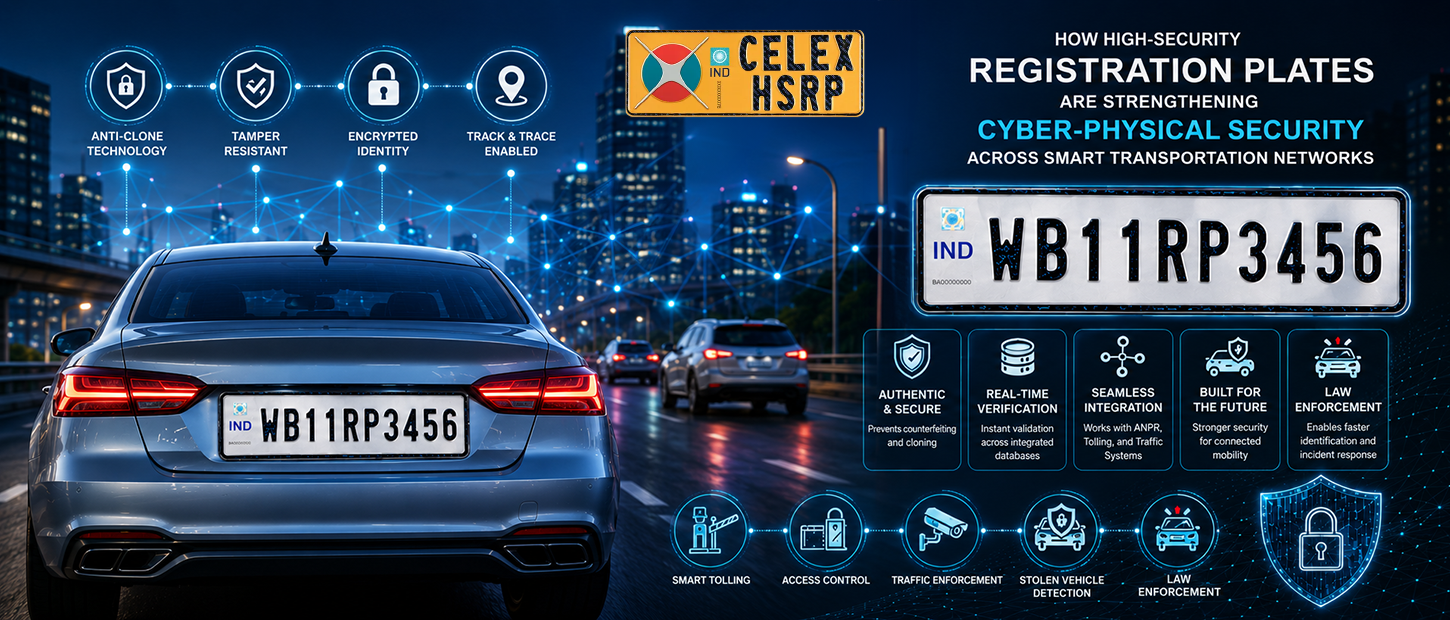
Backend integration with VAHAN databases creates an unbroken digital chain connecting manufactured plates to registered vehicles. This vehicle identity management system approach dramatically reduces fraud opportunities while improving operational transparency. Enforcement agencies gain access to verified registration data supporting automated violation detection, stolen vehicle recovery, and crime investigation operations across India’s transportation network.


Vehicle Security and Anti-Counterfeit Innovation in Modern Registration Plates

Anti-counterfeit registration systems employ multiple security technologies working together to prevent unauthorised duplication and tampering. Laser-etched registration plates incorporate permanent serial numbers, linking each plate to manufacturing records and vehicle databases. These engravings penetrate the substrate material, making alterations impossible without destroying the plate itself.


Chromium-based holograms applied during manufacturing display unique optical patterns visible under specific lighting conditions, providing authentication features that enforcement personnel can verify instantly. Reflective license plate manufacturing standards ensure consistent photometric performance, enabling automated recognition systems to capture vehicle identities accurately from various distances and angles. Snap locks represent another critical security layer. This tamper-proof number plate technology features unique destruction mechanisms: attempting to remove an installed plate breaks the lock irreversibly, preventing plate transfer between vehicles.


CELEX Technologies Private Limited engineers are actively involved in developing secure car registration solutions that aim to integrate advanced security features into cohesive architectures. The goal is to create registration plates that will eventually resist counterfeiting attempts while supporting enforcement operations through features enabling quick visual verification and automated digital authentication across India’s growing surveillance and enforcement infrastructure.


The Role of License Plate Manufacturers in India’s Smart Mobility Future

License plate manufacturers have become essential enablers of India’s smart mobility transformation. Intelligent traffic enforcement infrastructure, including automated speed cameras, red-light violation detection systems, and AI-powered surveillance networks, depends entirely on standardised high-security vehicle registration plates for accurate vehicle identification. Electronic toll collection systems processing millions of transactions daily require machine-readable registration formats for seamless operation.


Smart parking solutions in urban areas use registration plate recognition to automate entry, exit, and payment processes. These applications demand consistent plate dimensions, character specifications, and reflective properties that only compliant manufacturing can deliver. Digitally integrated registration plates support data-driven traffic management systems that analyse vehicle movement patterns, congestion hotspots, and route optimisation opportunities. Cities implementing these technologies reported 20-25% improvements in traffic flow management and enforcement efficiency.


CELEX Technologies Private Limited positions itself at the forefront of this transformation by producing registration plates specifically engineered for automated recognition systems. Their manufacturing processes ensure optical character consistency, reflective uniformity, and dimensional precision that emerging smart mobility technologies require. As India accelerates toward connected transportation ecosystems, manufacturers delivering scalable, technology-compatible registration solutions become critical infrastructure partners supporting the nation’s digital mobility vision.


Commercial Vehicle Expansion and the Need for Durable Registration Systems

India’s logistics and commercial vehicle registration plate manufacturing sector faces unique durability challenges. Heavy commercial vehicles operate under demanding conditions involving constant weather exposure, road vibrations, chemical contamination, and extended operational cycles spanning years without maintenance. Standard registration plates often deteriorate rapidly under these conditions, compromising readability and enforcement effectiveness.


Aluminium vehicle number plates with industrial-grade protective coatings resist corrosion from moisture, road salt, and chemical exposure. Advanced retro-reflective sheeting maintains optical performance despite surface abrasion from dust and debris. Embossing depth specifications ensure character visibility even when surface coatings experience wear. Manufacturers of high-security vehicle registration plates for commercial applications must balance security requirements with extreme durability demands.


CELEX Technologies Private Limited produces registration plates specifically tested for commercial vehicle environments, incorporating enhanced substrate treatments, reinforced mounting systems, and weatherproofing technologies that extend functional lifespan significantly. With India’s logistics sector growing at 10-12% annually and commercial vehicle registrations exceeding 10 million units, manufacturers supplying this segment require specialised engineering capabilities and production scale matching industry expansion. Durable registration systems ensure fleet operators maintain compliance while enforcement agencies retain vehicle identification capabilities throughout extended operational lifecycles.


Industrial Automation and Precision Manufacturing in HSRP Production

Automated license plate production systems have revolutionised manufacturing efficiency and quality consistency in the HSRP sector. Traditional manual fabrication methods couldn’t maintain the precision tolerances and security feature consistency that modern registration standards demand. Modern facilities utilise state-of-the-art embossing machines that ensure character depth specifications are maintained within microns across millions of units.


Robotic handling systems move substrates through production stages, eliminating human contact that could compromise security features or introduce contamination. Laser engraving equipment operates under digital control, creating permanent serial numbers with positioning accuracy and depth consistency impossible through manual processes. Optical inspection systems employing machine vision technology examine every manufactured plate, detecting defects, verifying security feature placement, and ensuring dimensional compliance. Quality control sampling becomes continuous rather than periodic, dramatically reducing defect rates while increasing production throughput.


CELEX Technologies Private Limited operates an advanced manufacturing infrastructure incorporating these automation technologies throughout production workflows. Their facilities maintain production capacities exceeding 1,00,000 plates daily while preserving strict quality and security standards. This combination of industrial scale and precision-driven manufacturing enables them to support India’s vehicle registration growth without compromising the security and integrity, which, in turn, are essential for effective vehicle identity management systems nationwide.


Why Regulatory Compliance Defines the Future of Registration Plate Manufacturing

Regulatory compliance represents the foundation of legitimate high-security vehicle registration plate manufacturing. The Ministry of Road Transport and Highways establish detailed technical specifications covering substrate materials, security features, dimensional tolerances, reflective performance, and testing protocols that manufacturers must meet. These standards ensure interoperability between registration plates and enforcement technologies deployed across different states and municipalities.


Non-compliant plates compromise automated recognition systems, undermine security measures, and create enforcement gaps that criminals exploit. Manufacturers must undergo regular audits to verify production processes, quality control systems, and security protocols. Compliance extends beyond manufacturing to include secure supply chain management, digital integration with VAHAN data, and traceability documentation linking manufactured plates to registered vehicles. States increasingly require manufacturers to demonstrate continuous compliance through certification programs and periodic testing.


CELEX Technologies Private Limited maintains rigorous compliance-driven manufacturing practices aligned with national standards and state-specific requirements. Their quality management systems document every production stage, creating audit trails supporting transparency and accountability. As enforcement agencies adopt more sophisticated intelligent traffic enforcement infrastructure, regulatory standards will likely evolve toward higher security levels and tighter digital integration. License plate manufacturers like CELEX Technologies Private Limited, maintaining proactive compliance postures and investing in technological capabilities matching emerging standards, will define the industry’s future competitive landscape.


The Future of Vehicle Identity Systems in India

Vehicle registration technologies stand at the threshold of significant transformation driven by artificial intelligence, connected vehicle ecosystems, and predictive analytics. Future smart vehicle identification systems may incorporate embedded sensors transmitting vehicle telemetry, location data, and operational status directly to traffic management systems. Registration plates could evolve into active identity beacons supporting vehicle-to-infrastructure communication essential for autonomous vehicle coordination and intelligent traffic management.


Blockchain technologies might create immutable registration records, preventing identity fraud while enabling transparent ownership transfers. AI-powered enforcement systems will demand even higher standardisation and machine-readability from registration plates to support real-time violation detection and automated penalty processing. Manufacturers will need to deliver registration solutions functioning as integrated identity assets within comprehensive digital mobility platforms. Environmental monitoring applications might leverage registration plate recognition to track vehicle emissions and enforce pollution control measures automatically.


CELEX Technologies Private Limited continues investing in research and development activities, exploring these emerging technologies and manufacturing capabilities required to support them. As India pursues its vision of becoming a 5 trillion-dollar economy with world-class transportation infrastructure, license plate manufacturers providing innovative, secure, and scalable registration solutions will play increasingly strategic roles in enabling this transformation and supporting the nation’s economic growth trajectory.


Conclusion

Modern license plate manufacturers have evolved far beyond simple metal fabrication operations into critical infrastructure providers supporting India’s vehicle security ecosystem. High-security vehicle registration plates now represent sophisticated security assets, integrating tamper-proof, laser-etched, and digitally integrated number registration technology that enables everything from automated enforcement to smart parking management.


Companies like CELEX Technologies Private Limited demonstrate how manufacturing excellence combines with technological innovation to deliver secure car registration solutions at a massive scale to meet India’s transportation growth demands. Their advanced automated license plate production systems maintain security integrity while producing millions of units annually, supporting states implementing HSRP mandates nationwide. The transformation from conventional painted plates to anti-counterfeit registration systems reflects India’s broader digital governance journey, where physical assets increasingly connect to digital infrastructure supporting transparency, efficiency, and security.


Standardised registration technologies produced in accordance with stringent compliance standards will only become more crucial as sophisticated traffic enforcement infrastructure and smart vehicle identification systems proliferate throughout urban areas. The future belongs to manufacturers combining industrial-scale production capabilities with innovation-driven approaches, preparing for connected mobility ecosystems where vehicle identity management becomes seamlessly integrated into comprehensive digital transportation platforms.


Partner with Industry-Leading Registration Plate Manufacturers for Enhanced Vehicle Security

CELEX Technologies Private Limited Pvt. Limited stands as your trusted partner for high-security vehicle registration plates and car registration plate manufacturing solutions meeting the highest standards of quality, security, and compliance. Our state-of-the-art manufacturing facilities in Kolkata combine advanced automated license plate production systems with rigorous quality control protocols, ensuring every plate delivers superior durability, security, and regulatory compliance.


We supply vehicle manufacturers (OEMs) and automotive dealers with tamper-proof number plate technology supporting India’s transportation security ecosystem. Our commitment to innovation drives continuous improvement in manufacturing processes, security features, and digital integration capabilities.


Contact CELEX Technologies Private Limited today to discuss how our expertise in laser-etched registration plates, aluminium-made vehicle number plates, and reflective license plate manufacturing can support your vehicle identity management requirements across any scale of operations.


Frequently Asked Questions

1. What makes high-security registration plates different from traditional number plates?

High-security vehicle registration plates incorporate laser-etched registration plates, chromium holograms, tamper-proof number plate technology, and reflective license plate manufacturing standards ensuring authenticity, durability, and machine-readability that traditional painted plates cannot provide.


2. How do license plate manufacturers ensure plates cannot be duplicated?

Modern license plate manufacturers use anti-counterfeit registration systems, including permanent laser-etched serial numbers, unique snap locks, holographic security features, and digital registration linking each plate to centralised databases, effectively preventing unauthorised duplication.


3. What role do registration plates play in smart city infrastructure?

Digitally integrated registration plates enable intelligent traffic enforcement infrastructure, automated toll collection, smart parking systems, and AI-powered surveillance networks that depend on standardised, machine-readable vehicle identification for operational effectiveness.


4. Why are aluminium substrates preferred for vehicle registration plates?

Aluminium vehicle number plates offer superior corrosion resistance, lightweight properties, embossing compatibility, and durability under harsh environmental conditions, making them ideal substrates for high-security vehicle registration plates requiring extended operational lifespans.


5. How does CELEX Technologies Private Limited ensure manufacturing quality and compliance?

CELEX Technologies Private Limited operates automated license plate production systems with computerised quality control, continuous optical inspection, rigorous testing protocols, and compliance-driven manufacturing processes, ensuring every plate meets regulatory specifications and security standards consistently.

Laser Code Cryptography on High-Security Plates: How the Best HSRP manufacturer is Engineering Unique Vehicle IDs That Can’t Be Cloned

Introduction


Vehicle fraud has evolved. Plate cloning has evolved. Traffic enforcement has evolved. Sadly, traditional number plates did not get the memo for years. Paint, screws, and stamped metal once worked fine because enforcement depended on human eyes and manual checks. That era is gone for good.


Today, India adds millions of vehicles to its roads every year. Automated challans, smart surveillance cameras, national databases, and digital policing now define how roads operate. In this environment, a duplicated or tampered plate is not a small issue. It breaks trust across the entire enforcement chain. A cloned plate lets offenders escape penalties. It misdirects investigations. It damages insurance claims. It creates identity chaos.


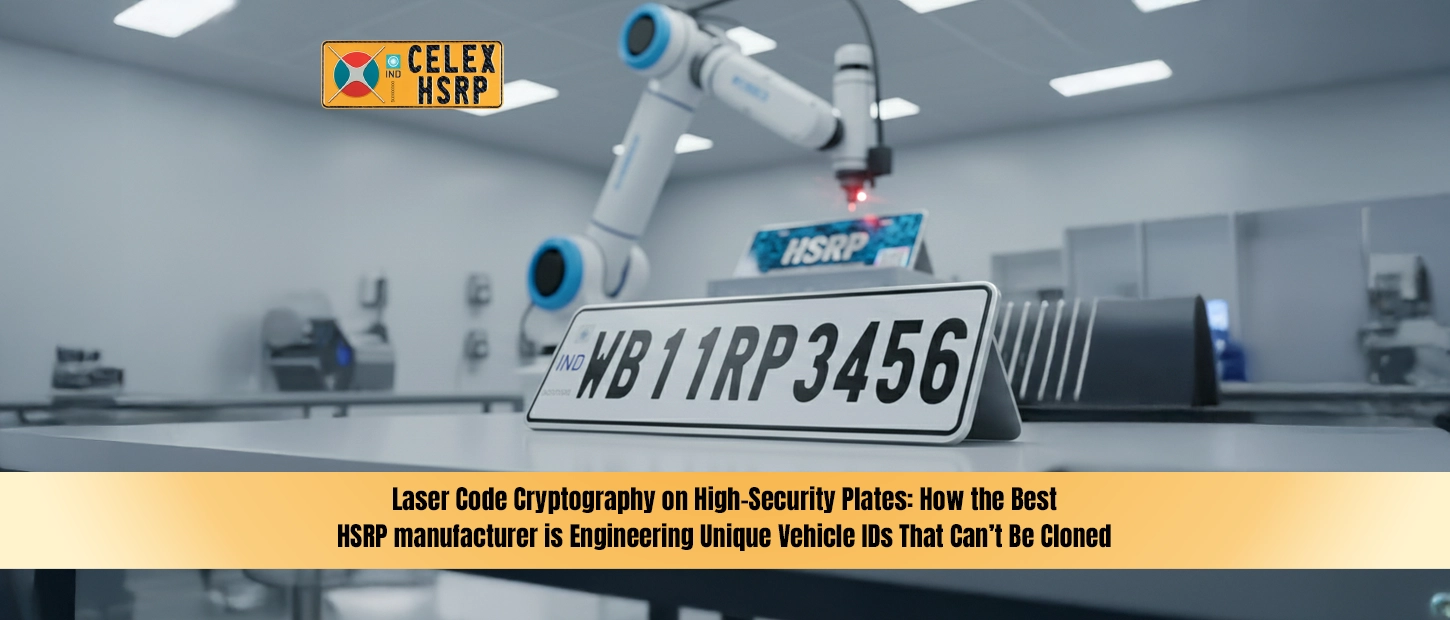
This problem demands more than stronger metal. It demands intelligence built into the plate itself. That is where High-Security Registration Plate systems powered by laser code cryptography change the game. Modern HSRPs carry a laser-etched permanent identification number that acts like a cryptographic fingerprint. This code does not just identify a vehicle visually. It authenticates it digitally. It links directly to official records. It refuses to be copied cleanly.


This article explains how the Best HSRP manufacturer engineers these unique vehicle identities at scale. It breaks down how laser engraving works, why cryptographic patterns beat simple serial numbers, and how secure linkage with national databases eliminates cloning loopholes. It also connects these systems to Celex’s HSRP quality assurance, showing how manufacturing discipline protects cryptographic integrity from raw material to final fitment.


Stick around. By the end, you will never look at a number plate the same way again.


Why Laser Cryptography Is a Game-Changer in Vehicle Security

Modern vehicle identity cannot rely on surface-level markings anymore. Criminals duplicate fonts. They copy colours. They recreate layouts. Basic plates fall apart under this pressure.


High-Security Registration Plate systems solve this by embedding identity into the material itself. Each plate carries a laser-etched permanent identification number that becomes inseparable from the plate structure. This number acts as a unique digital fingerprint. No two legitimate plates share the same code.


Unlike painted characters, laser codes do not sit on top of the plate. The process alters the retroreflective layer permanently. Any attempt to erase or modify the code destroys reflectivity and exposes tampering instantly.


This cryptographic approach blocks casual duplication and organised counterfeiting alike. Fraudsters cannot guess valid codes because each code is associated with a registered vehicle record. Guesswork fails. Replication fails.


Here, vehicle identification cryptography plays a silent but powerful role. The code structure follows controlled generation logic rather than random printing. Databases verify authenticity instantly.


As an OEM license plate manufacturer in India, Celex applies this security at a production scale. Every plate moves through controlled workflows that prevent duplication at the source. Cryptography begins before the plate ever reaches a vehicle.


Laser codes turn plates from visual labels into secure identity devices. That shift redefines vehicle security across the ecosystem.


The Science Behind Laser Etching: What Makes It Hard to Clone

Laser etching works at a microscopic level. The laser does not scratch the surface. It vaporises precise portions of the retroreflective plate encryption layer using controlled energy bursts.


This process creates micro-textures that scatter light differently from the surrounding material. Cameras detect this contrast instantly. Human hands cannot recreate it. Even advanced printing fails to match the depth, texture, and optical response.


Attempts to file or sand the code destroy the reflective film entirely. That damage becomes visible under inspection and unreadable under cameras. In short, cloning ruins usability.


Each laser pulse follows digitally programmed coordinates. That precision eliminates manual variance. The result stays consistent across millions of plates.


Celex pushes this further by exceeding baseline HSRP production standards. Tight calibration, frequent audits, and traceable batch controls ensure no duplication occurs during manufacturing.


This science-backed approach explains why laser codes act like digital signatures. They combine physical alteration with optical uniqueness. That combination defeats traditional counterfeiting methods effortlessly.


Linking Laser Codes to National Databases: The Backbone of Anti-Clone Security


A laser code means nothing without verification. The real power appears when that code links to official records.


Every legitimate HSRP laser code maps to a vehicle profile inside the National VAHAN database integration framework. This linkage creates instant validation. Enforcement systems scan the plate. Databases confirm identity. Any mismatch raises a red flag.


Fake plates collapse instantly under this model. Without a valid database entry, a plate has no identity. Traffic systems reject it. Enforcement officers flag it.


This system relies on accuracy. One wrong code breaks trust. That is why Celex invests heavily in controlled data handling and verification pipelines. Each plate undergoes digital reconciliation before dispatch.


As a RTO authorised plate supplier, Celex maintains clean data flows between manufacturing systems and registration platforms. This discipline ensures that every physical plate corresponds to a valid digital identity.


Database linkage transforms laser codes from markings into enforcement tools. Security scales automatically.


Cryptographic Patterns vs. Simple Serial Codes: Security Explained


Not all codes offer equal security. A simple serial number increases sequentially. Criminals exploit predictability easily.


Cryptographic plate codes follow controlled distribution logic. They include structure, verification checks, and uniqueness constraints. This design prevents pattern collision and brute-force duplication.


Each code validates itself against backend systems. Incorrect formats fail instantly. Missing checks expose fakes quickly.


The best HSRP manufacturer treats this as a production responsibility, not just a regulatory requirement. Celex enforces multi-layer validation to prevent accidental duplication during high-volume runs.


This approach elevates HSRP anti-cloning technology beyond compliance. It builds trust at the engineering level.


Combating Counterfeiting: Laser Codes in the War on Fake Plates


Fake number plates are not a small roadside problem anymore. They sit at the centre of serious crimes like vehicle theft, toll evasion, hit-and-run cases, fuel fraud, and organised plate cloning rackets. Criminals exploit weak plates because visual similarity fools humans, but machines do not forgive inconsistencies.


This is where HSRP anti-cloning technology becomes a frontline defence.


A genuine High-Security Registration Plate carries a laser-etched permanent identification number that exists both physically on the plate and digitally inside a registered vehicle database linkage system. The moment enforcement cameras scan a plate, the system checks whether that laser serial exists, matches the vehicle record, and aligns with registration metadata. Fake plates fail instantly because they cannot pass database validation.


Illegal manufacturers typically copy fonts and colours but skip cryptographic depth. They avoid laser engraving because replicating retroreflective plate encryption destroys material integrity and exposes tampering. Even if a fake code is etched, it lacks backend registration, which makes laser serial code verification fail in seconds.


As an anti-counterfeit HSRP manufacturer, Celex designs plates to close every known loophole. Controlled laser coding, strict HSRP production standards, and digital reconciliation prevent duplicate issuance. Every plate carries a traceable identity trail that law enforcement can trust.


This approach shifts enforcement from reactive checks to proactive detection. Fake plates stop being invisible. They become obvious anomalies inside smart vehicle identity systems.


OEM Integration: Why Manufacturers Prefer Cryptographically Verified Plates


Vehicle manufacturers cannot afford identity ambiguity. A plate that fails verification delays registration, delivery, and customer onboarding. That risk pushes OEMs to demand secure, compliant suppliers.


An OEM license plate manufacturer in India must deliver more than physical plates. It must support OEM license plate compliance, data accuracy, and seamless system integration. Cryptographically verified plates reduce disputes during registration and post-sale audits.


Laser-coded HSRPs integrate cleanly into OEM build-to-delivery pipelines. Vehicles leave the assembly line with identities that enforcement systems accept instantly. This reduces rework, avoids registration rejections, and protects brand credibility.


Celex supports OEM workflows through standardised plate formats, verified laser code issuance, and compliance-ready data handling. Its systems align physical manufacturing with digital verification layers, ensuring plates function correctly inside national registration and enforcement frameworks.


For OEMs, cryptographic plates are not a feature upgrade. They are risk control. Secure identity at birth simplifies every downstream process.


End-User Trust and Vehicle Lifecycle Management

Vehicle ownership does not end at registration. Plates stay relevant across resale, insurance, theft recovery, and compliance checks. A weak plate creates friction at every stage.


A cryptographically secure plate builds lifelong trust.


The laser-etched permanent identification number becomes a constant identity anchor. Insurers verify authenticity during claims. Buyers validate legitimacy during resale. Enforcement confirms records during routine checks. Every stakeholder sees the same verified identity.


This continuity matters because vehicle fraud often surfaces years after initial registration. Plates that rely on paint or stickers age poorly. Laser codes do not fade, peel, or detach.


Celex maintains lifecycle reliability through controlled production and Celex HSRP quality assurance systems. Each plate follows a regulated flow from blank substrate to vehicle delivery. This discipline ensures that identity integrity remains intact throughout the vehicle’s operational life.


Trust is not emotional here. It is systemic. Secure plates reduce disputes, speed up verification, and protect owners from identity-related risks.


The Future of Cryptographic Plates: RFID, Blockchain, and Beyond

Laser codes are the foundation, not the finish line. Future automotive security plates will likely combine laser engraving with RFID chips linked to backend records. This pairing enables faster roadside checks and automated tolling without sacrificing security. Blockchain-backed validation may store immutable plate histories, preventing data manipulation across ownership transfers.


AI-driven enforcement systems already analyse plate behaviour patterns. They flag anomalies like repeated location mismatches or suspicious movement trends. These systems rely on accurate physical identifiers to work effectively.


Laser-coded plates provide that accuracy. They anchor advanced technologies to a trusted physical identity.


Celex continues investing in forward-compatible manufacturing while maintaining present-day compliance. This balance ensures plates support both today’s enforcement needs and tomorrow’s smart vehicle identity systems without redesign or disruption.


The future does not replace laser cryptography. It builds on it.

Conclusion

Vehicle identity has become a security problem, a data problem, and an enforcement problem all at once. Weak plates collapse under this pressure. Cryptographically engineered HSRPs do not.


Laser code cryptography transforms number plates into permanent, verifiable identity devices. The laser-etched permanent identification number stops cloning, enables instant verification, and links vehicles reliably to official records. This integration strengthens enforcement, protects owners, and simplifies OEM workflows.


The best HSRP manufacturer does not treat compliance as a checklist. It treats identity as an engineered system. Through strict HSRP production standards, database accuracy, and tamper-proof number plate features, Celex ensures every plate carries cryptographic integrity from factory to vehicle.


In an era of automated enforcement and digital mobility, plates must do more than display numbers. They must prove identity. Laser-coded HSRPs do exactly that, quietly and reliably, every single day.


Frequently Asked Questions

1. Why are laser-etched codes safer than printed serial numbers?

Laser codes alter the plate permanently, making removal or duplication impossible without visible damage.


2. How does database linkage prevent plate cloning?

Each code must match a registered record. Fake plates fail verification instantly.


3. Do laser codes help in vehicle theft recovery?

Yes. Traceable codes allow faster identification across surveillance systems.


4. Why do OEMs prefer cryptographically verified plates?

They reduce registration errors, disputes, and compliance delays.


5. Can future technologies integrate with laser-coded HSRPs?

Yes. Laser codes form a strong base for RFID, AI, and blockchain systems.

Copyright 2026 © Celex Technologies Pvt. Ltd.