Picture a traffic camera misreading a truck’s plate at a toll plaza, charging the wrong owner, and triggering a compliance flag that takes weeks to resolve. Now multiply that error across thousands of vehicles daily on India’s expanding highway network. This is the hidden risk lurking inside smart transportation systems that rely on unreliable vehicle identification.
Fraudulent plates, cloned identities, and inconsistent manufacturing quality don’t just annoy drivers. They compromise surveillance accuracy, weaken law enforcement data, and create security gaps across connected infrastructure. If you care about transportation safety, fleet compliance, or how India’s digital mobility systems actually function, this article matters to you.
You’ll discover why high-security registration plates now serve as the trust anchor holding physical vehicles and digital infrastructure together, and how manufacturing precision directly protects the integrity of smart transportation networks nationwide.
Understanding Cyber Physical Security in Modern Transportation Ecosystems
Cyber-physical security refers to protecting the connection between physical assets and the digital systems that monitor them. In transportation, this means vehicles, traffic cameras, toll plazas, sensors, and signal systems all interact continuously with centralised databases and communication networks.
Every time a vehicle passes a toll booth or a highway surveillance camera, a small transaction happens. The physical vehicle gets scanned, matched against a database, and logged into a digital record. This interaction repeats millions of times daily across India’s road network, and each transaction depends on accurate physical identification feeding clean data into the system.
India’s registered vehicle count surpassed 413 million as of 2025 to 2026, according to the Ministry of Road Transport and Highways, and this scale makes secure identification absolutely critical. A single weak link, whether it’s a poorly manufactured plate or a fraudulent duplicate, threatens the accuracy of the entire digital transportation ecosystem.
Protecting this cyber-physical interaction isn’t optional anymore. It directly affects fraud prevention, operational continuity, and public safety. Trusted vehicle identification has become one of the foundational security layers supporting India’s intelligent transportation systems, and this trust starts with the plate bolted to the vehicle.
Why High-Security Registration Plates Have Become Critical Cyber-Physical Security Components
Standardised, tamper-resistant engineering plates do far more than satisfy legal requirements. They serve as the physical anchor that makes digital transportation systems trustworthy in the first place.
Why are high-security registration plates essential for cyber-physical security in smart transportation networks? Because automated systems cannot verify what they cannot reliably read. Without consistent plate standards, automated enforcement cameras misfire, intelligent surveillance systems generate false matches, and transportation analytics become unreliable at scale.
HSRPs solve this by giving every vehicle a standardised, machine-readable, and legally verifiable identity. This consistency allows toll systems, enforcement cameras, and fleet platforms across different states to read plates consistently. It removes the guesswork that plagued older, unregulated plate systems.
Long-term vehicle authentication also depends on this standardisation. A plate manufactured to national specifications remains readable and verifiable for years, supporting identity verification throughout the vehicle’s operational life. This reliability strengthens transportation governance while giving regulators and fleet operators a dependable identity layer to build digital systems around.
From Physical Number Plates to Digital Vehicle Identity Infrastructure
Number plates used to be simple metal strips carrying a registration number. That era is over. Today’s HSRPs function as digital vehicle identity assets that connect physical vehicles directly to official government records.
Secure identity creation begins the moment a plate gets manufactured. Each plate carries a unique, laser-etched identification number synchronised with centralised vehicle databases. This synchronisation ensures that scanning a plate anywhere in the country pulls up accurate, current vehicle information instantly.
Lifecycle traceability follows naturally from this system. Ownership transfers, insurance renewals, service records, and compliance checks can all reference the same secure plate identity. Manufacturers producing plates under government-approved standards and precision engineering, such as CELEX Technologies Pvt. Ltd., help ensure this digital gateway functions accurately across millions of vehicles nationwide.
The Engineering Technologies Behind High Security Registration Plates
The technical construction of an HSRP determines how well it performs within cyber-physical security systems. Each plate starts with an aluminium substrate, chosen for its durability and resistance to corrosion under India’s varied climate conditions.
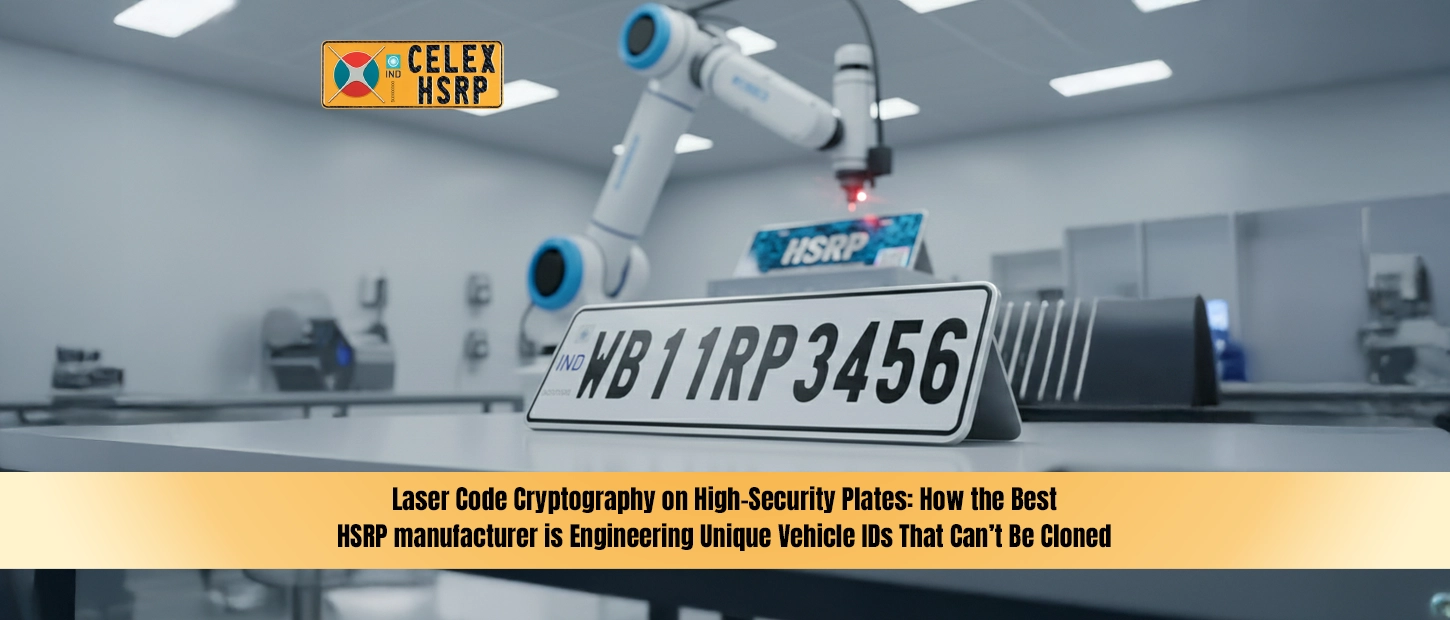
A chromium-based hologram sits fixed to the plate, designed to be extremely difficult to replicate. Inspectors and automated systems alike use this hologram as a quick authenticity check. Laser-etched identification codes provide permanent, non-alterable registration numbers that cannot be forged without leaving obvious physical damage.
Retroreflective sheeting covers the plate surface, bouncing light back toward its source. This feature dramatically improves how well cameras and headlights read the plate during nighttime hours or poor visibility conditions, directly supporting automated recognition accuracy.
Standardised embossing ensures every character maintains consistent height, spacing, and font across all plates nationwide. Tamper-proof snap locks fasten the plate to the vehicle and break visibly if someone attempts removal, immediately signalling potential fraud to inspectors. Together, these features create a plate engineered specifically for fraud prevention and reliable digital integration.
How Automated Recognition Systems Depend Upon Standardised High Security Registration Plates
Automatic Number Plate Recognition technology has become common across highway monitoring, toll collection, smart parking, and logistics checkpoints throughout India. These systems use cameras and image processing software to read plates instantly and match them against databases.
Recognition accuracy depends heavily on manufacturing consistency. If plate fonts vary slightly, reflective coatings degrade quickly, or embossing depth differs between manufacturers, recognition software struggles to extract accurate readings. This results in errors in enforcement records, slows down traffic flow, and necessitates manual intervention.
Consistently manufactured HSRPs give these camera systems a predictable target to scan. Toll plazas process vehicles faster, smart parking systems grant access without delay, and enforcement networks generate cleaner data. This reliability matters enormously as India’s smart transportation networks continue expanding into more cities and highway corridors.
How Do High Security Registration Plates Protect Smart Transportation Networks Against Vehicle Identity Fraud
Vehicle identity fraud takes several forms, including cloning, counterfeiting, and unauthorised duplication of registration numbers. Fraudsters sometimes copy legitimate plate numbers onto stolen or unregistered vehicles, hoping to avoid detection during routine checks.
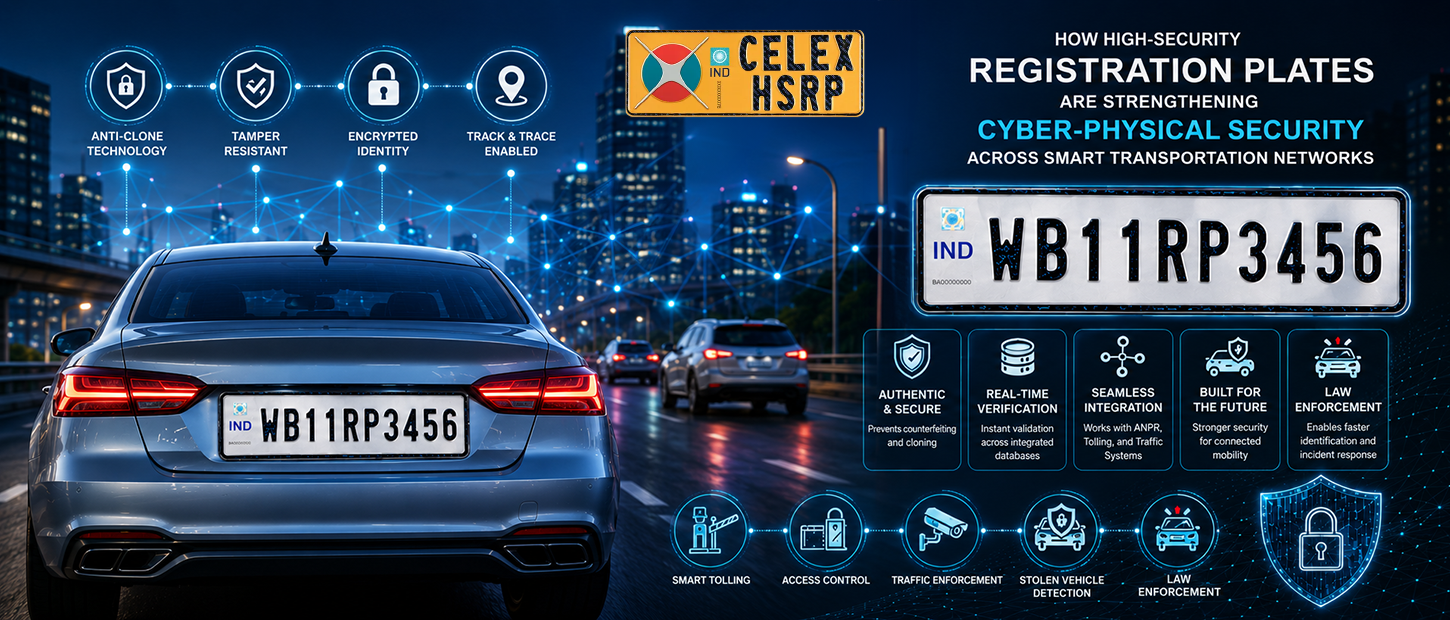
HSRPs make this significantly harder through multi-layered security features working together. A cloned plate might copy the visible number, but replicating the exact hologram, laser etching depth, and reflective sheeting quality proves far more difficult without access to certified manufacturing equipment. This is a core part of the plate’s anti-cloning technologies.
Unique identifiers embedded in each plate link back to centralised verification systems, allowing enforcement officers to instantly cross-check authenticity using mobile scanning tools. Tamper resistance through snap locks and embossing standards adds another layer, since any physical alteration becomes immediately visible upon inspection.
This layered approach strengthens both physical and digital transportation infrastructure simultaneously. When plates resist cloning, the entire chain of trust connecting vehicles to their digital records stays intact, protecting everything from toll billing accuracy to criminal investigation data integrity.
The Growing Role of Artificial Intelligence in Cyber-Physical Transportation Security
Artificial intelligence has moved into mainstream traffic management across Indian cities and highways. In order to predict traffic congestion before it occurs, predictive traffic monitoring systems examine patterns of vehicle flow. Anomaly detection tools flag unusual vehicle behaviour, such as a plate appearing in two distant locations within an impossibly short time window.
Intelligent surveillance networks now scan thousands of plates per hour across major intersections and highway checkpoints. Automated enforcement systems issue violation notices based on plate recognition rather than manual observation, speeding up processing while reducing human error.
None of these AI applications functions accurately without clean, standardised identification data. Why do high-security registration plates matter for AI-powered transportation security? Because AI models trained on inconsistent or poorly captured plate data produce unreliable outputs, undermining the very systems meant to improve safety and efficiency.
Precision-manufactured plates feed cleaner data into these AI systems from the start. This improves congestion management accuracy, strengthens risk analysis models, and supports more reliable automated decision-making across smart city infrastructure and national highway networks alike.
Building Secure Commercial Transportation Networks Through High Security Registration Plates
Commercial fleets face unique security and compliance pressures that make HSRPs especially valuable. Logistics operators and freight companies need accurate fleet traceability to track vehicles across warehouses, weighbridges, and interstate checkpoints without confusion or delay.
Automated warehouse access systems increasingly use plate recognition instead of manual security checks, granting entry only to verified vehicles. This speeds up loading and dispatch schedules while reducing unauthorised access risks. Weighbridge automation similarly depends on accurate plate reading to log vehicle weight against the correct registration record.
Digital compliance also improves significantly when fleet operators use standardised HSRPs. Regulatory audits move faster, insurance claims process with less friction, and ownership disputes become easier to resolve. Fleet managers running large operations gain better logistics intelligence simply because their vehicle identities remain consistent and verifiable across every checkpoint.
How CELEX Technologies Pvt. Ltd. Is Leading Cyber Physical Security Through Advanced High Security Registration Plates
CELEX Technologies Pvt. Ltd. has spent over 23 years building expertise in secure vehicle identification manufacturing. The company currently operates with an annual manufacturing capacity exceeding 5 crore HSRPs, supplying plates across 23 states through 348 touch points nationwide.
Partnerships with more than 500 OEM customers demonstrate the trust vehicle manufacturers place in the company’s engineering standards. A dealer network exceeding 12,000 partners ensures wide distribution reach, giving vehicle owners across the country access to genuine, compliant plates without unnecessary delays.
The company’s operational scale, reflected in a turnover exceeding 110 crore during the 2024 to 2025 financial year, along with a team strength of over 500 professionals, positions it as a significant contributor to India’s HSRP manufacturing sector. This combination of manufacturing precision and nationwide reach makes CELEX Technologies Pvt. Ltd. a genuine OEM license plate manufacturer in India, supporting the country’s secure transportation infrastructure.
The Future of High Security Registration Plates in Intelligent Connected Mobility
Connected vehicles, AI-powered mobility platforms, and smart city infrastructure will continue expanding across India in the coming years. Trusted vehicle identity will remain fundamental to this growth, supporting transportation governance and automated enforcement at scale.
HSRPs are transitioning from simple compliance components into genuine critical infrastructure. As transportation networks grow more connected and mobility-focused, the plate bolted to a vehicle carries increasing responsibility for maintaining trust between physical and digital systems. Manufacturers who prioritise engineering precision and secure production practices will shape how reliably this trust holds up.
Conclusion
Cyber-physical security in transportation depends on one deceptively simple thing: knowing which vehicle is which, every single time. High security registration plates make this possible through tamper-resistant engineering, standardised manufacturing, and secure digital synchronisation. From automated toll collection to AI-powered surveillance, every intelligent transportation system relies on the identity foundation these plates provide.
Companies like CELEX Technologies Pvt. Ltd. demonstrate how manufacturing precision directly strengthens national security infrastructure, one plate at a time. As India’s roads grow smarter and more connected, secure vehicle identification will only become more essential to keeping the entire system honest, safe, and reliable.
Frequently Asked Questions
1. What is cyber-physical security in the context of transportation?
It refers to protecting the connection between physical vehicles and digital systems like traffic cameras, toll databases, and enforcement networks that monitor them.
2. How do high-security registration plates prevent vehicle cloning?
They use laser-etched codes, holograms, and tamper-proof locks that are extremely difficult to replicate, making fraudulent duplication easily detectable during inspection.
3. Why do smart cities depend on standardised number plates?
Standardised plates ensure automated recognition cameras and AI systems read vehicles consistently, improving enforcement accuracy and reducing data errors across networks.
4. Can high-security registration plates be tampered with easily?
No, tamper-proof snap locks break visibly upon removal, and any physical alteration to the plate becomes immediately noticeable during routine inspection.
5. Why choose an established OEM license plate manufacturer in India?
Established manufacturers offer consistent quality, nationwide distribution, and precision engineering, ensuring vehicles meet national security and compliance standards from day one.