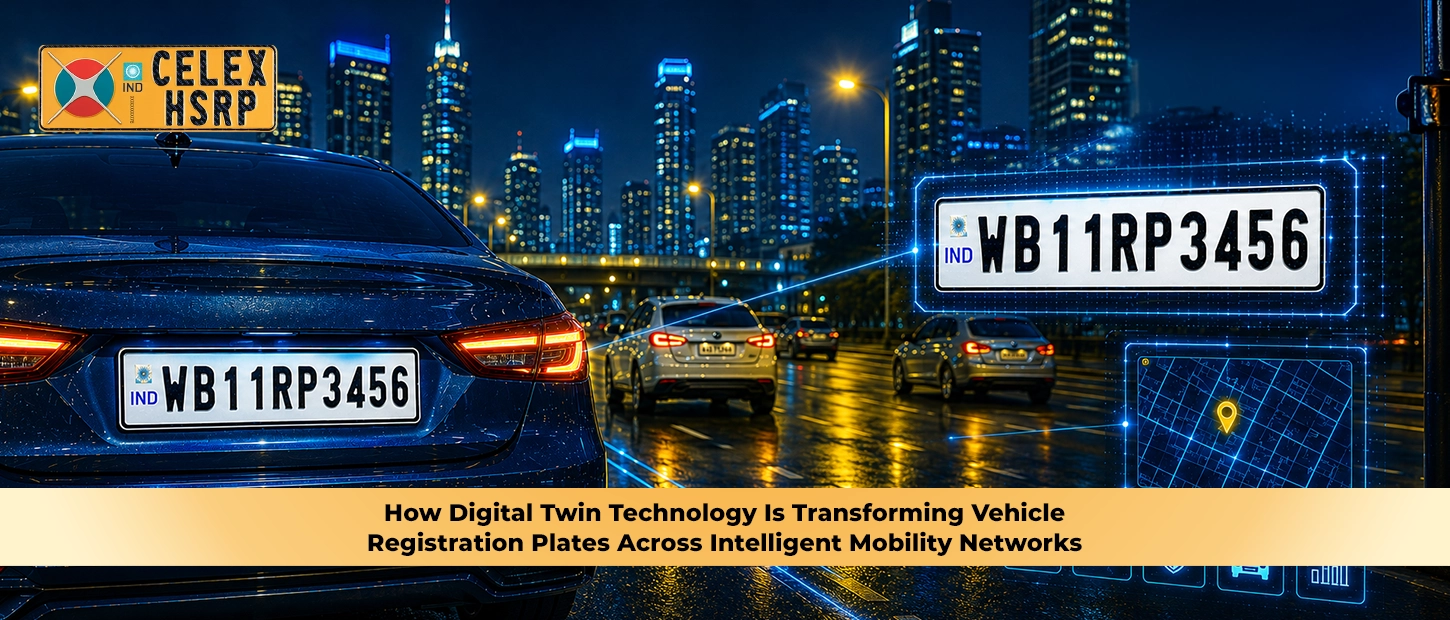
Transport is changing quickly, and most people are unaware of how. Roads are no longer just physical spaces where vehicles move from point A to point B. They are becoming intelligent networks where every vehicle continuously communicates with infrastructure, databases, enforcement systems, and mobility platforms.
This shift is exciting, but it also creates a critical challenge. How do you reliably identify millions of vehicles inside a system that never stops generating data? That is the exact problem digital twin technology is beginning to solve. If your vehicle operates inside a connected mobility ecosystem without a secure and traceable identity, the entire system loses accuracy and trustworthiness.
That is a real operational risk. The good news is that modern vehicle registration plates are stepping up in a big way. Advanced HSRP systems are becoming trusted digital identity gateways that connect physical vehicles with their virtual counterparts. Keep reading to discover exactly how this transformation works and why it matters for the future of transportation.
Introduction to Digital Twin Technology and the Evolution of Vehicle Registration Plates
Let us start with the basics. A digital twin is a virtual replica of a real physical asset. It receives continuous updates from its physical counterpart through sensors, databases, and connected systems.
Engineers originally used digital twins in manufacturing and aerospace. Today, transportation networks are adopting them aggressively to improve safety, efficiency, and visibility across entire mobility ecosystems.
At the same time, vehicle registration plates have gone through a quiet but significant transformation. Traditional plates displayed numbers. That was their entire job. Modern High Security Registration Plates do far more. They carry laser-engraved identification codes, chromium-based holograms, retroreflective sheeting, and tamper-resistant snap lock fasteners. These features make plates harder to duplicate and far easier to authenticate automatically.
Why does this matter for digital twin technology?
Every digital twin needs a reliable identity source. The physical vehicle needs a trusted reference point that connects it to its digital records. That reference point is the registration plate.
As intelligent transportation ecosystems become more sophisticated, the plate is no longer a passive number display. It is an active identity carrier that helps digital systems recognise, authenticate, and track vehicles in real time. This fundamental shift positions registration plates as critical infrastructure within the broader connected vehicle ecosystem.
Understanding the Digital Twin Framework in Intelligent Mobility Networks
Picture a vehicle travelling through a smart city corridor. Traffic cameras capture their movement. Electronic toll systems log their passage. Insurance platforms verify their coverage. Maintenance databases monitor their service history. Regulatory systems check their compliance status. Every single one of these interactions generates data, and all that data feeds into a central digital twin platform that reflects the vehicle’s real-world status continuously.
This framework operates through four interconnected layers. First, you have the physical vehicle itself. Second, data acquisition systems collect information from cameras, sensors, GPS units, and enforcement platforms. Third, a digital twin platform processes and stores that information. Fourth, an identity management infrastructure ensures every data point links to the correct vehicle.
How do vehicle registration plates fit into this framework?
They sit at the heart of the identity management layer. Every database query, every enforcement interaction, every compliance check begins with identifying the vehicle. The registration plate provides that identification. Without a secure and consistent plate identity, the entire data framework loses its reliability. Research into intelligent transportation systems consistently highlights accurate identity management as a non-negotiable requirement for maintaining synchronisation between physical vehicles and their digital replicas. Manufacturers contributing to secure vehicle identification infrastructure are therefore directly supporting the integrity of these connected systems.
Why Vehicle Registration Plates Are Becoming Digital Identity Gateways
This is a pivotal moment in understanding the evolution of vehicle registration plates. Traditionally, a vehicle registration plate was merely a bureaucratic necessity, required for the legal operation of a vehicle. However, this simplistic view has transformed significantly. Today, registration plates have evolved into essential components of a broader digital identity framework, serving functions far beyond mere compliance.
Each registration plate serves as a gateway for digital identities. The moment a vehicle enters a connected transportation network, its plate becomes the key that unlocks an entire ecosystem of digital records. Traffic monitoring platforms retrieve vehicle history. Toll systems process payments automatically. Compliance databases verify insurance and registration validity. Law enforcement platforms confirm ownership and flag anomalies. All of this happens within seconds.
Modern HSRPs support this capability through multiple-layered security features. The laser-branded alphanumeric code provides a unique identifier that automated systems can read reliably. The chromium-based hologram serves as a visual authentication marker. The reflective surface improves recognition accuracy under varying light conditions. The snap lock fastening mechanism makes unauthorised removal immediately visible.
Can a vehicle registration plate genuinely function as a digital identity anchor?
Absolutely. And the evidence is clear across multiple transportation ecosystems globally. Advanced plate systems built to consistent manufacturing standards reduce identity fraud, improve automated recognition rates, and create reliable bridges between physical assets and digital records. This is exactly the kind of infrastructure that future intelligent mobility networks depend on.
Connecting Physical Vehicles with Their Digital Counterparts Through HSRP Systems
Digital twins are only as good as the data that feeds them. Garbage in, garbage out. That principle applies with full force to vehicle identity management.
HSRP systems create reliable connections between physical vehicles and their digital counterparts by establishing persistent unique identifiers at the registration stage. The laser-engraved code on each plate links directly to centralised government databases containing ownership details, chassis numbers, engine specifications, insurance records, and compliance history. Every subsequent interaction throughout the vehicle’s life refers back to that same identifier.
This creates a consistent digital thread running through the entire vehicle lifecycle. Ownership transfers update the digital record. Insurance renewals synchronise automatically. Maintenance activities log against the same profile. Traffic violations are associated with the correct vehicle history. The physical plate and the digital twin remain connected because the identity anchor never changes.
How does this help with fraud prevention?
Significantly. Duplicate plates, cloned identities, and tampered records become far easier to detect because inconsistencies across the synchronised digital ecosystem trigger alerts. The physical security features of the plate add another protective layer by making duplication attempts visible and difficult. Manufacturers investing in precision manufacturing processes and rigorous quality standards are therefore directly contributing to the reliability of vehicle lifecycle management across connected transportation networks.
The Role of Machine-Readable Registration Plates in Intelligent Transportation Ecosystems
Modern transportation networks process enormous volumes of data every single second. Manual identification simply cannot keep pace with this scale. That is where machine readability becomes essential.
Automatic Number Plate Recognition technology now powers a wide range of transportation applications. Smart toll collection processes millions of transactions daily without human intervention. Traffic management centres monitor vehicle flows across entire city networks in real time. Parking systems automate entry and exit based on plate recognition. Vehicles that are flagged or unregistered are immediately flagged by law enforcement platforms.
All of these applications depend on consistent, high-quality registration plates. Poor reflectivity reduces recognition accuracy in low-light conditions. Inconsistent character spacing confuses optical recognition algorithms. Faded or damaged plates generate errors that cascade through dependent systems.
Why does manufacturing quality directly affect transportation system performance?
Because every automated interaction begins with a successful plate read. A failed or inaccurate read corrupts downstream data. When that data feeds into a digital twin platform, the corruption spreads through the vehicle’s entire digital record.
Standardised HSRPs manufactured to precise specifications address this problem directly. Consistent reflective sheeting, standardised fonts, accurate laser engraving, and durable materials maintain recognition performance across years of operational use. India’s HSRP mandate, which requires high security plates across all registered vehicles, was introduced specifically to establish a uniform identification standard that supports modern transportation systems. With over 413 million registered vehicles in India as of 2025, according to the Ministry of Road Transport and Highways, the scale of reliable machine-readable identification required is staggering.
How Digital Twin Technology Enhances Vehicle Traceability and Lifecycle Management
In modern-day transport ecosystems, traceability has emerged as a primary concern. Authorities need to know where vehicles have been, who owns them, and whether they comply with applicable regulations. Insurers need accurate risk profiles. Fleet operators need maintenance visibility. Individual owners need reliable ownership records.
Digital twins address all of these needs simultaneously.
A continuously updated digital replica maintains a complete history of every significant event in a vehicle’s life. Ownership changes, registration renewals, insurance updates, service appointments, traffic incidents, and compliance inspections all feed into the same synchronised profile. The result is an auditable, trustworthy record that serves multiple stakeholders at once.
How do registration plates support vehicle lifecycle traceability?
They act as persistent physical identifiers that anchor every interaction to the correct digital record. The plate does not change when ownership transfers. The core identifier remains stable even as surrounding records evolve. This stability is what makes long-term traceability possible.
Research into Internet of Vehicles ecosystems demonstrates that digital twins combined with intelligent analytics can support predictive maintenance by identifying performance patterns that signal potential failures before they occur. A vehicle with a reliable digital identity benefits from this capability fully. Every data point is associated correctly with its history, making the predictive models more accurate and actionable. Secure manufacturing standards that ensure plate durability and consistent readability across the vehicle’s operational life directly support this long-term traceability objective.
Strengthening Smart Enforcement Through Digital Twin-Enabled Registration Systems
Traditional enforcement relied heavily on manual checks, fragmented databases, and delayed information exchange. Officers pulled over vehicles individually. Database queries took time. Records were sometimes incomplete or outdated. Intelligent mobility networks demand something far more capable.
Digital twin-enabled enforcement changes this entirely. A continuously synchronised digital replica provides authorities with real-time visibility into a vehicle’s status, history, and compliance record. The moment an enforcement system reads a plate, it can retrieve a complete and current profile almost instantly.
How does this improve enforcement outcomes?
Faster identification reduces response times. Accurate records reduce wrongful stops. Predictive analytics help authorities allocate enforcement resources more effectively by identifying high-risk patterns before incidents occur. Automated surveillance systems flag non-compliant vehicles without requiring manual monitoring.
Trusted HSRP systems are essential to this framework. Machine-readable plates with consistent security features allow enforcement platforms to operate at scale across entire transportation networks. Research on transportation digital twins confirms their ability to support real-time monitoring and system-level decision-making across large operational environments. Reliable plate infrastructure is what makes that capability accessible at the ground level.
Data Integrity and Cyber-Physical Security in Digital Vehicle Identity Networks
Connected systems attract attacks. This is not a hypothetical risk. As vehicle identity data becomes increasingly valuable within intelligent mobility ecosystems, it becomes an attractive target for fraud, manipulation, and unauthorised access.
Identity cloning, registration fraud, database manipulation, and vehicle spoofing are real threats that can undermine the reliability of entire transportation networks. A compromised vehicle identity corrupts the digital twin, generates false compliance records, and potentially enables criminal activity.
What security mechanisms protect digital vehicle identity systems?
Several layers work together. Physical tamper resistance in the registration plate prevents unauthorised removal or duplication. Centralised database synchronisation detects inconsistencies across records. Authentication protocols verify identity claims before granting access to sensitive vehicle data.
Research increasingly explores the role of digital twins in automotive cybersecurity, noting that virtual replicas allow organisations to simulate attacks, identify vulnerabilities, and validate defences before real-world incidents occur. Manufacturers who maintain rigorous quality control, comply with regulatory standards, and implement consistent security features in their plates are contributing meaningfully to the cyber-physical trust frameworks that connected transportation ecosystems depend on.
How Celex Technologies Pvt Ltd Is Supporting the Future of Digital Vehicle Identity Infrastructure
Among the manufacturers building this foundation, Celex Technologies Pvt Ltd stands out for its focus on precision, compliance, and scalability. The company operates as a dedicated HSRP manufacturer with capabilities spanning design, production, and deployment of high-security registration systems at a national scale.
Celex Technologies Pvt Ltd brings several critical strengths to this space. Its manufacturing processes meet stringent regulatory specifications, ensuring that every plate delivers consistent reflectivity, accurate laser engraving, and reliable security features. This consistency directly supports automated recognition systems and digital twin data integrity across large transportation networks.
The company’s nationwide operational reach means it can serve diverse geographic markets while maintaining uniform quality standards. As India continues expanding its connected transportation infrastructure across metropolitan corridors and regional networks alike, this scalability becomes increasingly important.
Why does manufacturing expertise matter so much in digital vehicle identity infrastructure?
Because the physical plate is the foundation of every digital interaction. No software platform, no enforcement system, no digital twin can function reliably if the identity anchor at the physical layer is inconsistent or insecure. Celex Technologies Pvt Ltd’s commitment to manufacturing excellence positions it as a key contributor to India’s evolving intelligent mobility infrastructure and the broader vision of synchronised physical and digital transportation ecosystems.
The Future of Vehicle Registration Plates in Fully Connected Mobility Ecosystems
Transportation is heading somewhere genuinely transformative. Autonomous vehicles, AI-powered traffic management, smart city ecosystems, predictive governance frameworks, and seamlessly connected mobility networks are no longer distant concepts. They are active development priorities across governments and technology organisations worldwide.
Inside these future ecosystems, vehicle registration plates will play a more strategic role than ever before. They will serve as primary identity anchors connecting physical vehicles with AI systems, infrastructure networks, insurance platforms, regulatory frameworks, and digital twin environments simultaneously.
Future applications may include real-time identity verification for autonomous vehicle authorisation, seamless cross-border mobility management, dynamic insurance models based on verified operational data, and predictive governance systems that identify compliance risks before they materialise.
Will registration plates remain relevant as transportation becomes increasingly automated?
Without a question. Every intelligent system requires a trusted identity layer. The more automated and interconnected transportation becomes, the more important reliable vehicle identification becomes. The best HSRP manufacturers, like Celex Technologies Pvt Ltd, building secure, machine-compatible, and durable registration systems today, are laying the foundation for tomorrow’s mobility infrastructure.
The future of intelligent transportation depends on seamless synchronisation between physical assets and digital environments, and advanced HSRP systems will remain central to achieving that synchronisation.
Conclusion
Digital twin technology is fundamentally reshaping how transportation systems understand and manage vehicles. A vehicle is no longer just a physical object on a road. It exists simultaneously as a physical asset and a continuously updated digital profile that reflects its condition, compliance status, ownership history, and operational behaviour.
Vehicle registration plates sit at the heart of this transformation. Modern HSRPs have evolved from simple numbering mechanisms into trusted digital identity gateways. They connect physical vehicles with real-time digital records across compliance systems, enforcement platforms, maintenance databases, insurance networks, and intelligent transportation infrastructure. Their role grows more strategic with every advance in connected mobility technology.
Manufacturers who deliver consistent, secure, and machine-compatible registration systems are not simply fulfilling a regulatory requirement. They are actively building the physical identity infrastructure that makes intelligent mobility possible. The synchronisation of physical and digital transportation worlds begins with a reliable identity anchor. That anchor is the vehicle registration plate.
Frequently Asked Questions
1. What is a digital twin in the context of vehicle management?
A digital twin is a virtual replica of a physical vehicle that updates continuously using real-world data. It supports real-time monitoring, maintenance planning, compliance tracking, and ownership verification throughout the vehicle’s operational lifecycle.
2. Why are vehicle registration plates important in digital twin ecosystems?
Registration plates provide a unique physical identity anchor that connects vehicles to their digital records. Without a reliable plate identifier, data synchronisation across connected mobility platforms becomes inaccurate and untrustworthy.
3. How do HSRPs improve vehicle security and fraud prevention?
HSRPs incorporate tamper-resistant fasteners, laser-engraved identifiers, chromium holograms, and reflective sheeting. These features make duplication difficult, support automated authentication, and help detect fraudulent identity claims across transportation systems.
4. Can predictive car maintenance be supported by digital twins?
Yes. Digital twins analyse operational data patterns to identify potential mechanical issues before failures occur. This improves safety, reduces unexpected downtime, and helps vehicle owners and fleet operators plan maintenance more efficiently.
5. How will vehicle registration plates evolve in future autonomous transportation systems?
Future plates will support real-time digital authentication, AI-driven identity verification, cross-network interoperability, and smart city infrastructure integration, making them strategic identity assets within fully connected and autonomous mobility ecosystems.