Introduction
Look at your car registration plates right now. Be honest. They probably look and feel boring. Just metal. Just paint. Just numbers. Most drivers treat them like an afterthought, right up until a challan hits the phone or a stolen vehicle case shows how fragile old-school identification really is.
Here’s the hard truth. Traditional plates cannot keep up with modern traffic, digital enforcement, or rising vehicle fraud. Cities now run on cameras, data, and automation. Roads talk to databases. Signals talk to vehicles. Enforcement talks to machines. If plates stay stuck in the past, the entire system breaks. That gap creates risks like plate cloning, weak enforcement, poor traffic analytics, and zero accountability in large vehicle ecosystems.
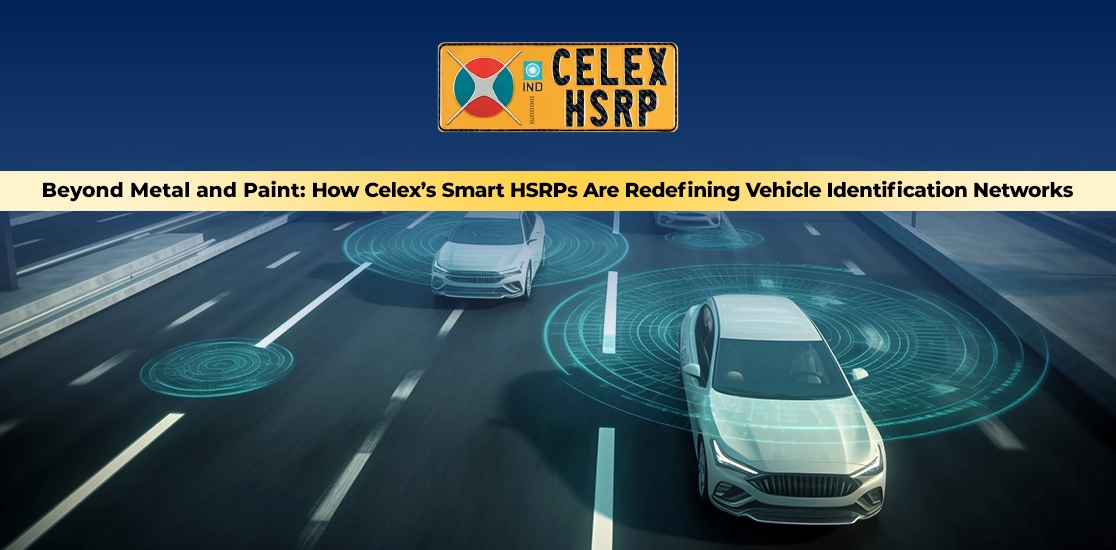
This is exactly where smart number plate systems come into the scene to play a vital role. High Security Registration Plates are no longer passive tags. They now act as machine-readable identity anchors inside massive vehicle identification networks. Cameras read them. Databases validate them. Enforcement systems trust them. Traffic analytics depend on them. One small rectangle now feeds entire intelligent transportation systems (ITS).
This article explains how Celex HSRP solutions push that evolution forward. It breaks down how smart plates work, why standardisation matters, and how precision manufacturing supports digital enforcement at scale. It also shows how Automatic Number Plate Recognition (ANPR), national vehicle records, and real-time traffic systems rely on secure plates to function properly.
Stick with this guide, and you will see why smart plates are no longer optional hardware. They are critical infrastructure. And yes, they quietly keep cities moving while drivers barely notice. That is real engineering magic.
From Simple Plates to Smart Vehicle Identity Anchors
Vehicle registration plates started life as basic identifiers. Painted letters. Stamped metal. Human-readable only. Traffic police read them with eyes, notebooks, and radios. That system worked when traffic volumes stayed low, and enforcement stayed manual.
Fast forward to today. India alone adds millions of vehicles every year. Manual enforcement collapses under that pressure. Cities now depend on digital vehicle tracking systems and automated surveillance. Cameras watch intersections nonstop. Toll plazas capture data in seconds. Traffic violations generate digital records instantly.
Old plates simply cannot support this ecosystem.
Modern smart number plate systems act as active identity anchors. Cameras scan them. Algorithms interpret them. Databases verify them in real time. Every vehicle becomes a moving data point inside vehicle identification networks.
This shift demands precision. Plates must follow strict formats. Fonts, spacing, reflectivity, and alignment must stay uniform. Even small deviations reduce recognition accuracy. That is why high security registration plate compliance matters more than aesthetics.
Celex enters this space as a top HSRP number plate provider by merging regulation with scale. Its engineering aligns with national standards while supporting production volumes that large ecosystems demand. Smart plates now serve traffic enforcement, theft prevention, tolling systems, and urban analytics simultaneously.
Plates no longer sit silently on bumpers. They talk to machines. They authenticate vehicles. They power automated decision-making across cities. That transformation marks the true evolution of car registration plates from static metal to intelligent network nodes.
Anatomy of a Smart HSRP: Beyond Metal and Lettering
At first glance, a High Security Registration Plate looks simple. That simplicity hides serious engineering.
The base uses high-grade aluminium designed for durability and uniform thickness. This ensures consistent flatness so cameras capture clean visuals. On top sits retroreflective registration technology, which reflects light directly back to its source. Headlights and infrared cameras depend on this property for night-time readability.
Next comes the chromatic hologram. This feature prevents duplication and visual tampering. It also helps enforcement teams quickly verify authenticity during physical checks.
The real intelligence lies in laser-etched vehicle identifiers. Each plate carries a unique alphanumeric code permanently etched into the metal. This code links directly to vehicle records in national vehicle databases. No stickers. No removable tags. Just permanent traceability.
All these features exist for machine readability. Automatic Number Plate Recognition (ANPR) systems rely on uniform fonts, spacing, and reflectivity. Poor-quality plates break OCR accuracy and trigger false data.
Celex focuses heavily on HSRP manufacturing standards to maintain this uniformity. Quality control checks ensure plates perform reliably under heat, dust, rain, and constant exposure. That consistency allows plates to function as trusted inputs inside enforcement and analytics systems.
Smart plates do not succeed through fancy add-ons. They succeed through boring precision. And precision is exactly what large-scale vehicle identity networks demand every single day.
ANPR Systems and Smart City Connectivity
Now zoom out from the plate itself and look at the ecosystem. Automatic Number Plate Recognition (ANPR) systems sit at the core of modern traffic surveillance and enforcement. Cameras capture plate images. Optical character recognition converts visuals into digital text. That text flows into databases for validation, alerts, and analytics.
This pipeline collapses without standardised plates. Smart HSRPs support consistent recognition across lighting conditions, angles, and speeds. Uniform reflectivity improves night capture. Precise fonts reduce OCR errors. Standardised spacing boosts algorithm confidence.
Cities now use ANPR for traffic violations, stolen vehicle detection, toll management, and congestion analysis. Every inaccurate read creates noise. Noise breaks trust in automation.
Smart plates reduce that noise. They integrate seamlessly into smart mobility infrastructure, allowing public and private systems to work together. Tolling platforms, city surveillance, and traffic dashboards all pull from the same identification layer.
Celex’s focus on plate uniformity directly improves recognition accuracy across deployments. That reliability allows enforcement teams to act on data without second-guessing machine outputs.
In smart cities, plates do not just identify vehicles. They enable systems to speak the same language. That shared language powers real-time decisions across intelligent transportation systems (ITS).
Linking Smart Plates to National Databases for Security and Enforcement
A plate means nothing without verification.
Smart HSRPs link directly to central vehicle records through unique identifiers. This connection ensures every scanned plate matches a registered vehicle profile inside national vehicle databases.
Without this link, enforcement systems fail. Duplicate plates slip through. Stolen vehicles hide in plain sight. Fraud flourishes.
Smart plates solve this by acting as authenticated access points. Laser-etched vehicle identifiers tie each plate to a specific record. Systems verify ownership, status, and compliance instantly.
Celex’s plates support this architecture through traceable coding and strict certification. Each plate enters the ecosystem already mapped to official records. That mapping enables automated challans, theft alerts, and compliance checks.
Law enforcement now queries databases in seconds instead of hours. Automated systems flag anomalies without human bias. Plate standardisation becomes the backbone of trustworthy enforcement.
Security does not come from cameras alone. It comes from secure inputs. Smart HSRPs provide exactly that.
Real-Time Benefits: Traffic Management, Tolling and Safety Applications
Once plates become smart, benefits multiply fast.
Traffic management systems monitor congestion through plate counts and movement patterns. Authorities adjust signals dynamically. Urban planners analyse flow trends. All this depends on accurate plate recognition.
Electronic tolling uses ANPR to identify vehicles without barriers. Faster movement reduces fuel waste and emissions. Payment systems trust the plate data to settle transactions.
Accident response improves when emergency teams identify vehicles instantly. Verified plates speed up owner contact and investigation workflows.
These outcomes rely on reliable hardware. Plates must perform consistently across millions of scans. Celex’s production discipline ensures plates behave predictably under real-world conditions.
Smart plates feed live data streams. They no longer sit passively. They actively support safety, efficiency, and enforcement across transportation systems.
Security, Fraud, and Anti-Theft: The Smart Plate Advantage
Plate cloning remains a major threat. Fraudsters copy numbers to dodge enforcement or hide stolen vehicles.
Tamper-resistant license plates shut this door hard. Smart HSRPs use non-removable locks, permanent etching, and holographic markers. Any attempt to alter or replace the plate leaves visible damage.
Surveillance networks cross-check plates against databases continuously. Mismatches trigger alerts. Vehicles become easier to locate and authenticate.
Celex’s expertise in secure manufacturing strengthens this defence. Precision coding and material integrity make plates resilient against manipulation.
In large vehicle ecosystems, prevention beats recovery. Smart plates reduce crime opportunities before they scale.
OEM Integration and Manufacturing Excellence at Celex
Scale matters. Celex operates manufacturing systems capable of producing millions of plates monthly while maintaining consistency. This capacity supports OEM workflows, retrofit programs, and nationwide deployments without bottlenecks.
OEM license plate integration demands zero deviation. Assembly lines rely on predictable components. Smart plates must meet timelines, quality benchmarks, and compliance requirements simultaneously.
Celex delivers plates across hundreds of cities while maintaining uniform standards. That reach supports seamless integration into vehicle identification networks without fragmentation.
Manufacturing excellence directly influences digital reliability. Poor plates break smart systems. High-quality plates enable automation at scale.
The Future of HSRPs: AI, IoT and Beyond
Smart plates continue evolving. Future HSRPs may integrate RFID, IoT sensors, and blockchain-backed authentication. AI-driven recognition systems will learn faster and adapt to complex environments.
Plates could support predictive traffic models, autonomous vehicle coordination, and dynamic policy enforcement. Every advancement depends on a secure, standardised physical identifier.
Celex positions itself as a bridge to this future. Its focus on compliance, scalability, and precision lays the groundwork for next-generation mobility infrastructure.
Smart plates already power cities today. Tomorrow, they may power entire transportation intelligence layers.
Conclusion
Car registration plates have quietly transformed into critical digital infrastructure. They now authenticate vehicles, feed enforcement systems, and power smart mobility decisions at scale.
Smart HSRPs support vehicle identification networks, connect seamlessly with Automatic Number Plate Recognition (ANPR), and link reliably to national records. They improve security, efficiency, and accountability across transportation ecosystems.
Celex’s engineering discipline, manufacturing scale, and compliance architecture strengthen this transformation. Its plates do more than meet regulations. They enable trust in automated systems that governments and cities depend on daily.
Beyond metal and paint lies a future where identification stays invisible yet indispensable. Smart HSRPs make that future work.
Frequently Asked Questions
1. Why do smart HSRPs matter more than traditional plates?
Smart plates support machine readability, database linking, and automated enforcement, which traditional plates cannot handle reliably.
2. How do ANPR systems depend on plate quality?
Recognition accuracy relies on uniform fonts, reflectivity, and spacing, all delivered by standardised smart plates.
3. Do smart plates really reduce vehicle fraud?
Yes. Tamper-resistant features and database linkage make cloning and misuse far harder.
4. How do smart plates support traffic management?
They feed accurate vehicle data into analytics systems that monitor congestion and flow patterns.
5. Are smart HSRPs future-ready for AI and IoT systems?
Yes. Their standardised design allows seamless integration with evolving intelligent transportation technologies.